


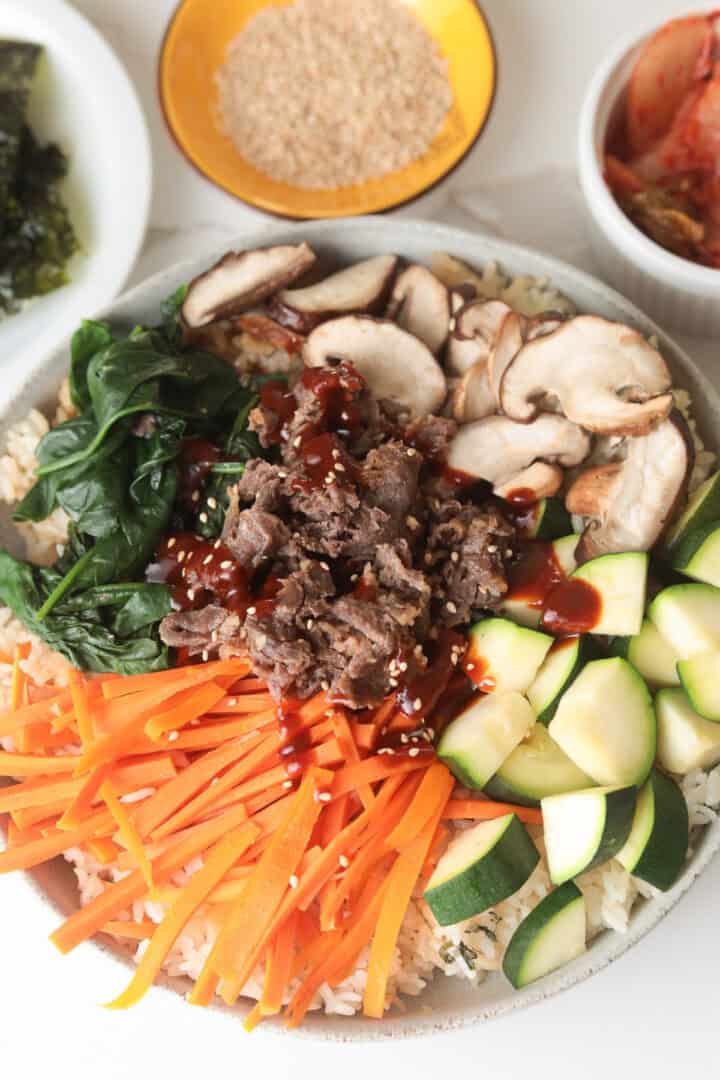
Rice cooker bibimbap is an easy and flavor-packed one-pot meal with tender beef, vegetables, and fluffy rice. This simplified version of the classic Korean rice bowl lets you cook everything together in your rice cooker, making it perfect for busy weeknights.
Want to save this recipe for later?
Table of contents
Why We Love Rice Cooker Bibimbap
- Easy one-pot dinner - The rice, meat, and vegetables cook together in the rice cooker, saving you from having to cook each ingredient separately.
- Healthy and filling - With protein from the beef, fiber from the vegetables, and fluffy rice, this is a satisfying meal for the whole family.
- Easy to customize - Use whatever vegetables you have on hand, swap the beef for another protein, or adjust the gochujang to suit everyone's spice preference.
- Simple grocery store ingredients - Most ingredients are easy to find at your regular grocery store, with just a few Korean pantry staples for the sauce.
What is Rice Cooker Bibimbap?
Bibimbap (비빔밥) is a traditional Korean mixed rice dish made with warm rice, seasoned vegetables, protein, and topped with a fried egg. It's typically served with gochujang (Korean red chili paste) and sesame oil.
Traditional bibimbap is prepared by cooking the toppings separately and arranging them over rice. Some versions are served in a hot stone bowl called a dolsot, which creates a delicious crispy layer of rice at the bottom.
This rice cooker version simplifies the process by cooking the rice, beef, and vegetables together in one pot. You still get the familiar flavors of bibimbap without having to cook every topping separately.
Bibim (비빔) means “mixing” or “stirring together” and bap (밥) means “cooked rice”. This dish is meant to be mixed thoroughly to enjoy all of the mix of textures in one bite.
Ingredients
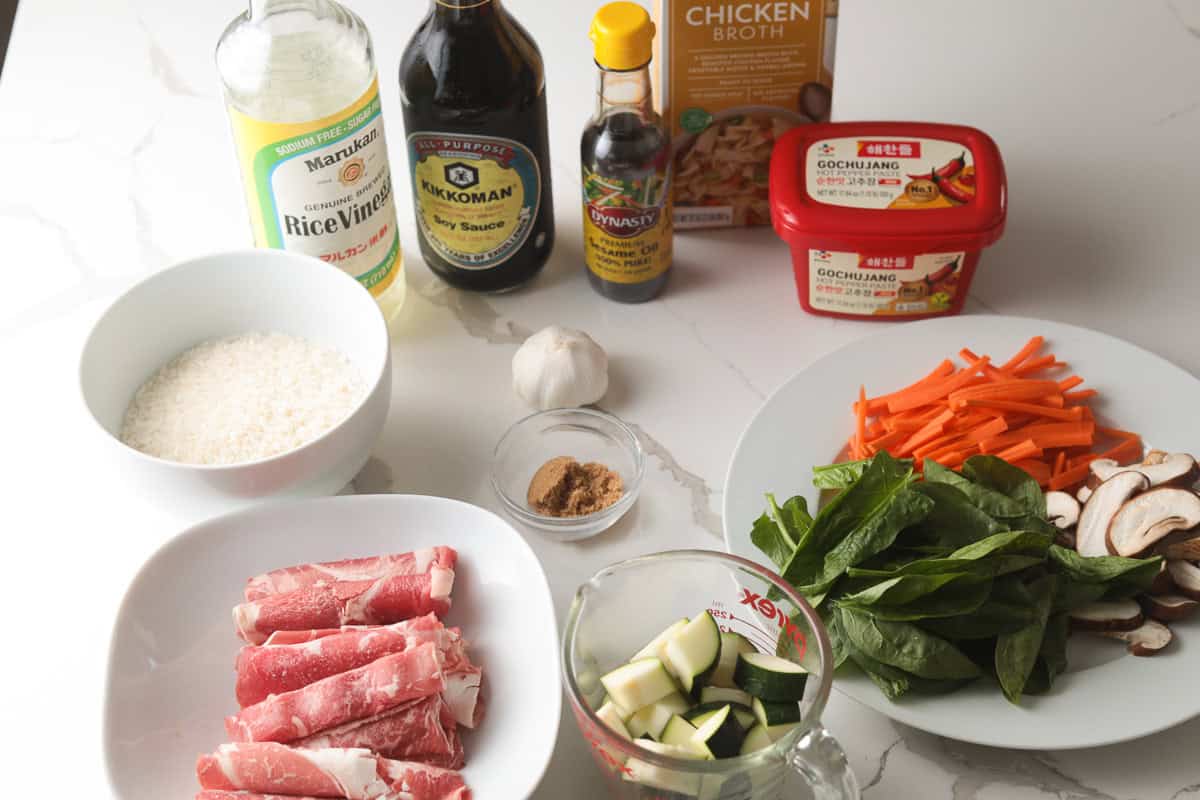
- Rice - I use short-grain white rice for its soft, slightly sticky texture, which makes it perfect for mixing with the beef, vegetables, and sauce.
- Beef - Thinly sliced shabu-shabu beef works well because it cooks quickly. You can also use thinly sliced ribeye or sirloin. It's also great for making this beef sukiyaki, another comforting meal featuring tender beef and vegetables.
- Chicken broth - Adds a savory flavor to the rice as it cooks. You can substitute water or beef broth.
- Vegetables - carrots, squash, and spinach leaves - This combination adds texture to the bibimbap and makes it more filling.
- Shiitake mushrooms - Fresh shiitake mushrooms add a rich, earthy umami flavor to this dish. I recommend using fresh rather than dried mushrooms, as dried shiitakes have a much stronger, more concentrated flavor.
- Beef marinade - Brown sugar, soy sauce, sesame oil, and garlic - Creates a sweet and savory marinade that flavors the beef as it cooks.
- Gochujang paste - This Korean fermented red chili paste adds a savory, slightly sweet, spicy flavor. I use mild spice, its the perfect spice level for our family.
- Vinegar - Adds acidity to balance the sweetness and richness of the gochujang sauce.
Equipment Needed
- Rice cooker
- Sharp knife or vegetable slicer
- Mixing bowl
How to Cook Bibimbap in the Rice Cooker
1. Marinate the meat
In a mixing bowl, marinate the thinly sliced beef with the marinade ingredients. Mix until the beef is evenly coated, then set aside while you prepare the vegetables and rice.
2. Prepare the veggies and rice
Prepare the vegetables as needed. Rinse the rice thoroughly and drain well to remove excess water before cooking.
3. Add everything to the rice cooker
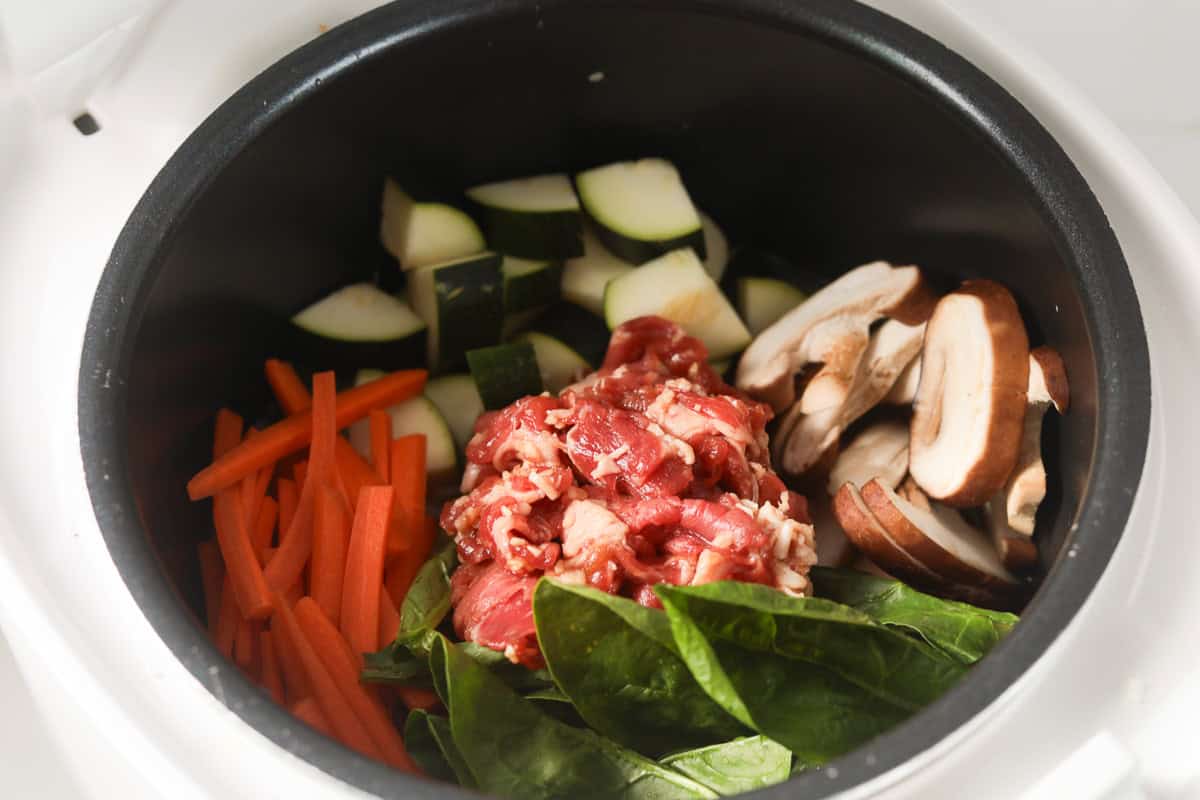
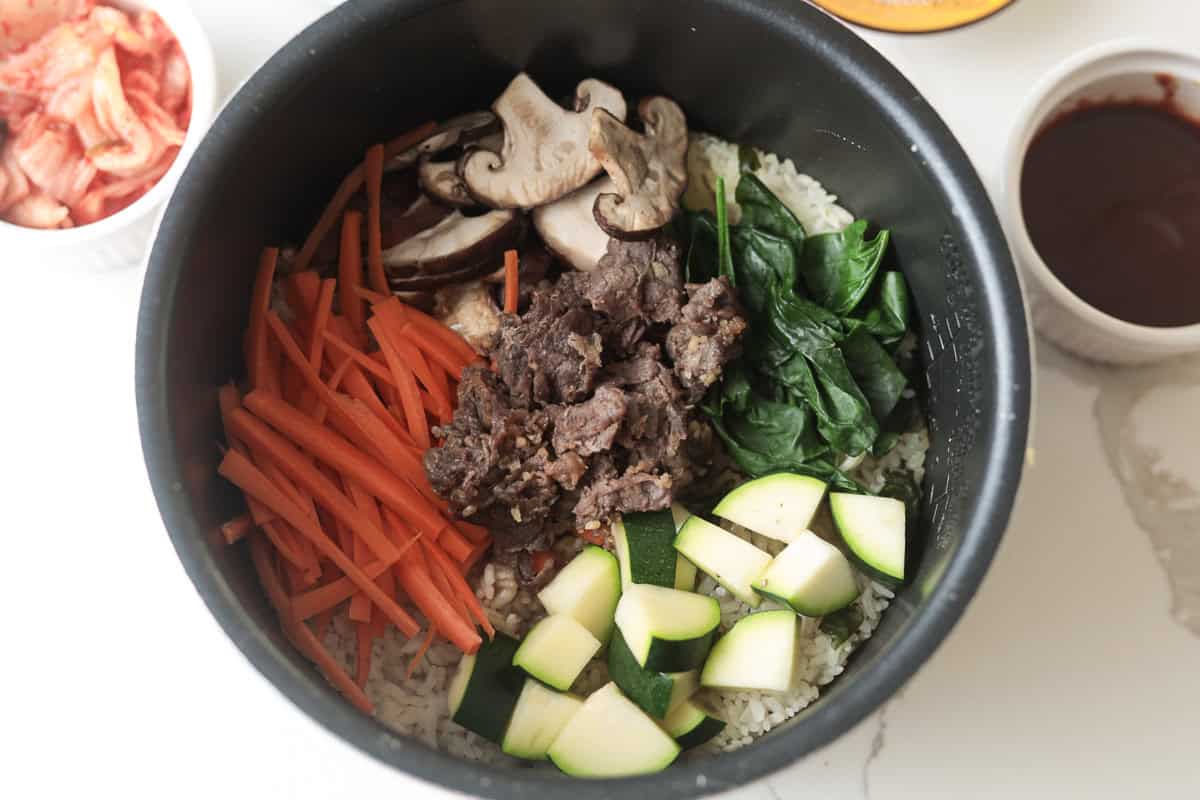
Add the rinsed rice and chicken broth to the rice cooker. Arrange the sliced vegetables in separate sections over the rice, then spread the marinated beef evenly on top.
4. Press cook
Close the lid and select the regular white rice setting. Cook until the cycle finishes, approximately 30 minutes, depending on your rice cooker. Check that the beef is fully cooked before serving.
5. Add sauces and serve
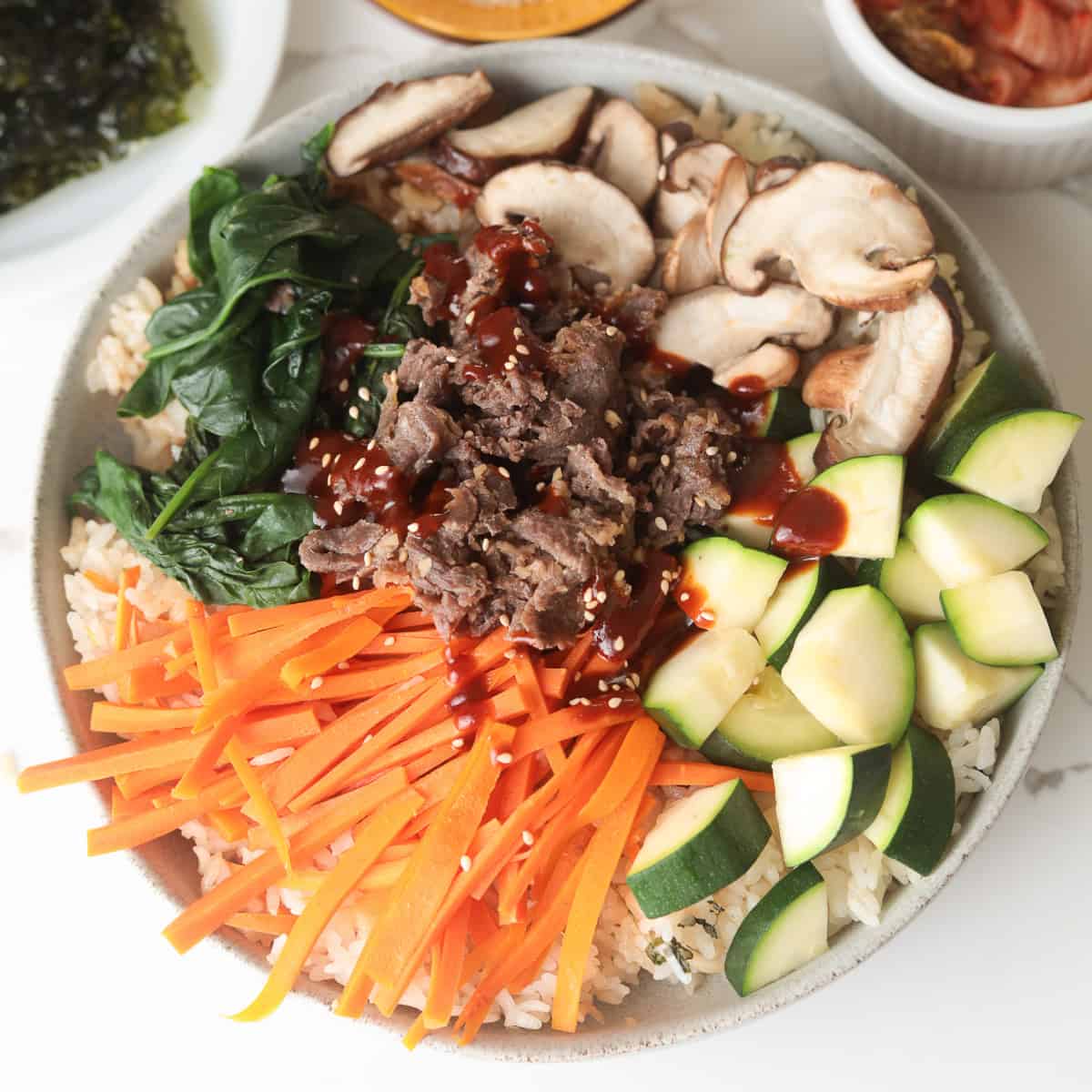
Mix the gochujang with a little sesame oil and adjust to taste. Spoon the cooked bibimbap into bowls, add the sauce, and mix everything thoroughly. Serve with your favorite toppings, such as a fried egg, kimchi, or roasted seaweed.
Pro Tips to Make the Rice Cooker Bibimbap
- Buy prepped ingredients - Save time by using fresh sliced mushrooms, pre-cut julienned carrots, and pre-washed baby spinach to cut down on prep work.
- Drain the rice well - Remove any excess water from the rinsed rice and washed vegetables to prevent the rice from turning mushy during cooking.
- Don't overload your rice cooker - Spread the vegetables and beef in an even layer, and stay below your cooker's maximum capacity. Overfilling can cause uneven cooking or prevent the rice from cooking properly.
- Add the gochujang after cooking - Keep the sauce separate until serving so everyone can adjust the spice level. This is especially helpful when making bibimbap for kids.
- Recook if needed - If the beef or rice isn’t fully cooked, press the “COOK” button again to start another cycle until everything is cooked through.
Variations & Add-ins
- Vegetarian rice cooker bibimbap - Skip the beef and replace it with tofu or additional mushrooms. Use vegetable broth instead of chicken broth and check that your gochujang is vegetarian.
- Use other meats - Swap the shabu-shabu beef for ground beef, chicken, or pork. If using pork, choose thinly sliced pieces, or cut the chicken into small, bite-sized pieces so they cook through properly.
- Extra vegetables - Add bean sprouts, zucchini, or bok choy. For a little crunch, add fresh cucumber slices after cooking.
- Spicy bibimbap - Mix additional gochujang into your sauce or finish your bowl with Korean chili flakes (gochugaru).
What to Serve with Rice Cooker Bibimbap
This rice cooker bibimbap is already a complete meal, but a few simple Korean-inspired sides and toppings can make it even better.
- Egg - A sunny-side-up egg is a classic bibimbap topping. The runny yolk mixes with the rice and gochujang to create a rich, creamy sauce. You may also top this with rice cooker hard-boiled eggs for a healthier option.
- Kimchi - Serve with napa cabbage kimchi for a tangy, spicy, fermented side that complements the savory beef and rice.
- Din Tai Fung-inspired Cucumber Salad - A refreshing, crunchy side that balances the savory beef and spicy gochujang sauce.
- Healthy Japchae - These Korean glass noodles with vegetables make a delicious addition to a Korean-inspired dinner spread.
Storage and Reheating
Freezing this rice cooker bibimbap isn't recommended since all the ingredients are cooked together, and the vegetables may become mushy after thawing. If you prepare the ingredients separately, you can freeze the cooked rice, beef, and freezer-friendly vegetables in individual portions and assemble your bibimbap when ready to eat.
To refrigerate:
Transfer leftover bibimbap to shallow, airtight containers and refrigerate promptly, within two hours of cooking. Store for up to 3–4 days. Keep the gochujang sauce and fresh toppings separate.
To reheat:
Microwave refrigerated bibimbap with a splash of water, loosely covered, until steaming hot throughout. Stir halfway through to heat everything evenly.
Yes, you can cook thinly sliced raw beef with the rice in a rice cooker, as long as the beef reaches a safe internal temperature of 145°F (63°C). Thin slices work best because they cook quickly along with the rice.
Yes. You can skip the gochujang and serve the bibimbap with soy sauce, sesame oil, or another sauce you prefer. The dish will be less spicy but still flavorful.


One Pot Rice Cooker Bibimbap
Equipment
Ingredients
- 1 cup Short grain rice Use the standard 1-cup US measuring cup, not the small cup that comes with your rice cooker. Ok to sub with medium or long grain rice
- 1 cup chicken broth Use the standard 1-cup US measuring cup, not the small cup that comes with your rice cooker.
- 8 ounce Thinly sliced beef, cut into bite size pieces prepackaged frozen shabu meat recommended
- 1 tablespoon brown sugar
- 1 tablespoon soy sauce
- 2 teaspoon sesame oil
- 2 cloves garlic, minced
- 1 cup spinach leaves buy prepackaged for easy prep
- ¾ cup carrots, julienned buy prepackaged for easy prep
- ½ cup shiitake mushrooms, sliced buy prepackaged for easy prep
- ½ zucchini, cut into small pieces
Gochujang sauce
- 2 tablespoons gochujang paste
- 2 teaspoons sesame oil
- 2 teaspoons rice vinegar
Instructions
- Marinate the meat. In a mixing bowl, marinate the thinly sliced beef with brown sugar, soy sauce, sesame oil and garlic. Mix until the beef is evenly coated, then set aside while you prepare the vegetables and rice.
- Wash and cut the vegetables as needed.
- Rinse the rice with water, three times and drain well to remove excess water before cooking.
- Add the rinsed rice and chicken broth to the rice cooker pot.
- Arrange the sliced vegetables in separate sections over the rice, then spread the marinated beef evenly on top.
- Close the lid and select the regular white rice setting. Cook until the cycle finishes, approximately 30 minutes, depending on your rice cooker. Check that the beef is fully cooked before serving.
- While the rice is cooking, mix the gochujang with the sesame oil and rice vinegar, set aside.
- When the rice is done cooking, spoon the cooked bibimbap into a large bowl, add as much sauce as preferred, and mix everything thoroughly. Serve with your favorite toppings, such as a fried egg, kimchi, or roasted seaweed.
Video
Notes
- Add gochujang sauce to taste
- Buy prepped ingredients - Save time by using fresh sliced mushrooms, pre-cut julienned carrots, and pre-washed baby spinach to cut down on prep work.
- Drain the rice well - Remove any excess water from the rinsed rice and washed vegetables to prevent the rice from turning mushy during cooking.
- Recook if needed - If the beef or rice isn’t fully cooked, press the “COOK” button again to start another cycle until everything is cooked through.
- Cooking times may differ depending on the rice cooker model.


Leave a Reply