


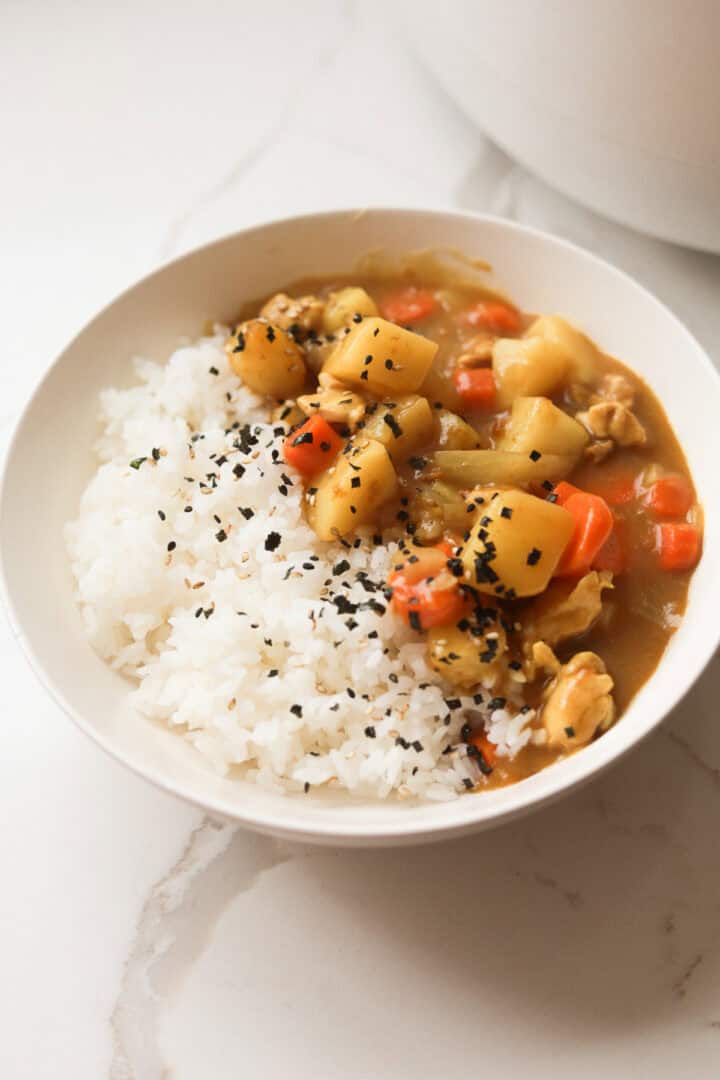
Rice cooker chicken curry is an easy way to make Japanese-style curry for a comforting family dinner without standing over the stove. This one-pot method combines chicken, potatoes, carrots, onions, and Japanese curry roux in the rice cooker, making it a practical option for busy weeknights with less hands-on cooking and cleanup.
Want to save this recipe for later?
Table of contents
- Why Our Family Loves this Recipe
- What is Rice Cooker Chicken Curry?
- Ingredients
- Equipment Needed
- How to Cook Curry in the Rice Cooker
- Pro Tips to Make the Best Rice Cooker Chicken Curry
- Variations & Add-ins to Customize Your Rice Cooker Curry
- What to Serve with Rice Cooker Chicken Curry
- Storage & Reheating
- More Rice Cooker Recipes
Why Our Family Loves this Recipe
- One-pot dinner - The chicken, vegetables, and curry sauce cook together in the rice cooker, so there’s no need to juggle multiple pots and pans.
- Mild and family-friendly - Japanese curry roux gives the sauce its signature savory flavor with a gentle sweetness that works well for kids.
- Easy to customize - Swap the protein or add your family’s favorite vegetables to make the curry your own.
- Great for meal prep - Make a batch ahead of time and enjoy the leftovers for lunch or another easy dinner.
What is Rice Cooker Chicken Curry?
Japanese chicken curry is a comforting dish made with chicken and vegetables simmered in a thick, savory curry sauce. It’s commonly served over steamed rice, udon noodles, and bread with the Japanese curry roux providing much of its signature flavor and texture.
This rice cooker chicken curry simplifies the traditional stovetop method by letting the rice cooker handle most of the cooking. Add the ingredients to the pot, start the regular rice cooking cycle, and let the cooker do the work.
Ingredients
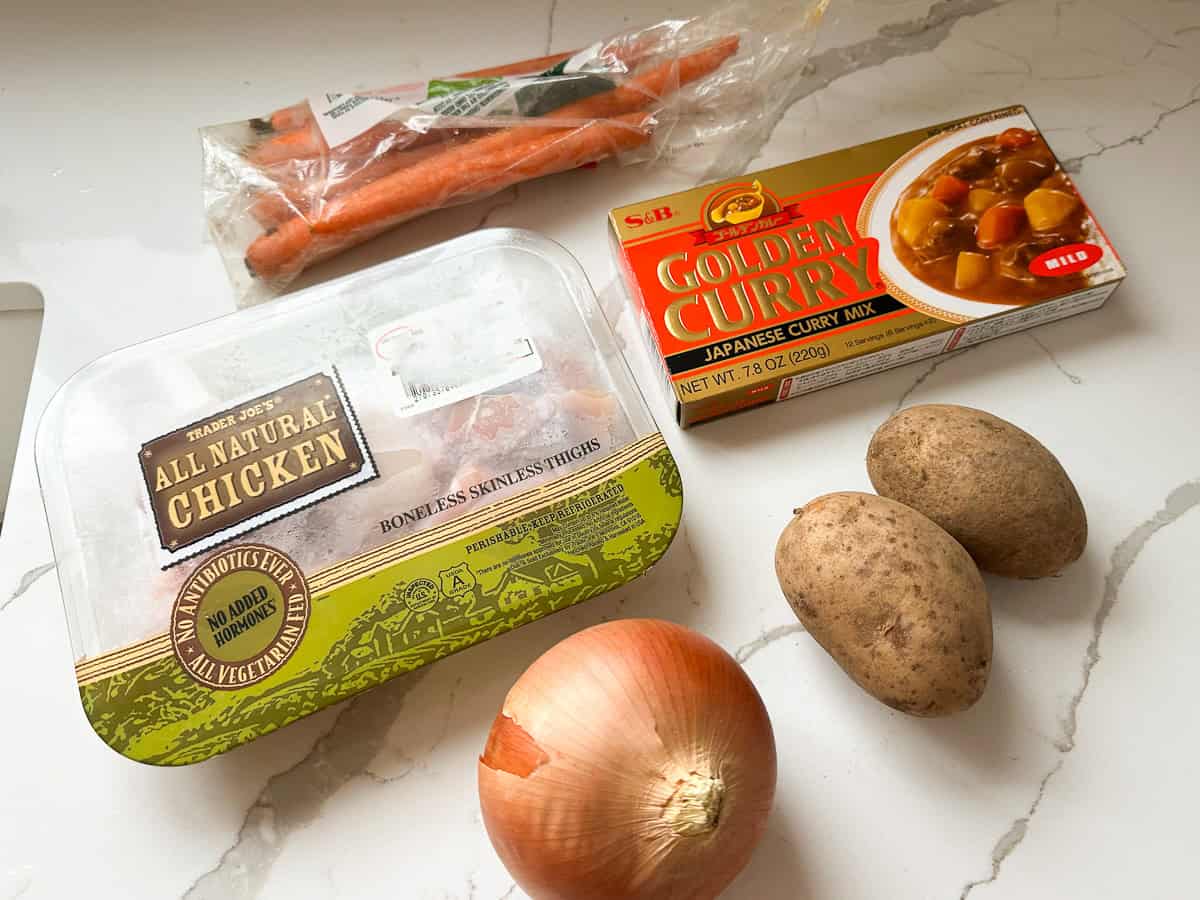
- Chicken - Use skinless, boneless chicken and cut to bite-sized pieces so it cooks evenly and is easy to eat.
- Vegetables - potatoes and carrots make for a hearty and thickened curry.
- Onion - White onion adds sweetness and aroma as it cooks into the curry sauce.
- Japanese curry roux - This is the key ingredient for a classic Japanese curry flavor and a thicker sauce. I use S&B Golden Curry for its mild, savory flavor that my kids enjoy.
- Water - Creates the liquid base for the curry and helps the roux dissolve into the sauce.
Equipment Needed
A standard rice cooker is all you need for this recipe. A basic one-button rice cooker works for this recipe as long as it has a standard white rice cooking cycle.
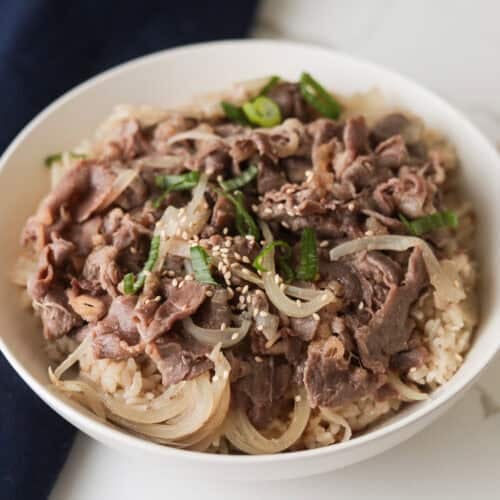
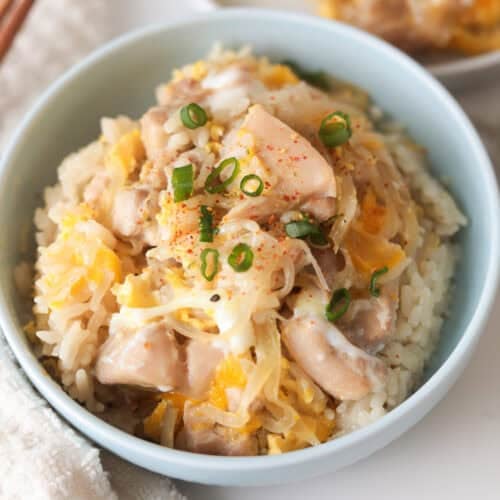
I use a Cuckoo six-cup rice cooker, which has multiple settings and makes it easy to prepare rice and one-pot meals. I also used it for my other Japanese-inspired recipes like rice cooker oyakodon and rice cooker gyudon.
How to Cook Curry in the Rice Cooker
1. Prepare the ingredients
Cut the chicken into bite-sized pieces. Peel and cut the potatoes and carrots into pieces.
2. Prepare the curry roux
Break the Japanese curry roux into smaller pieces as needed. This helps it distribute more easily through the liquid and makes it easier to mix into the sauce after cooking.
3. Add everything to the rice cooker
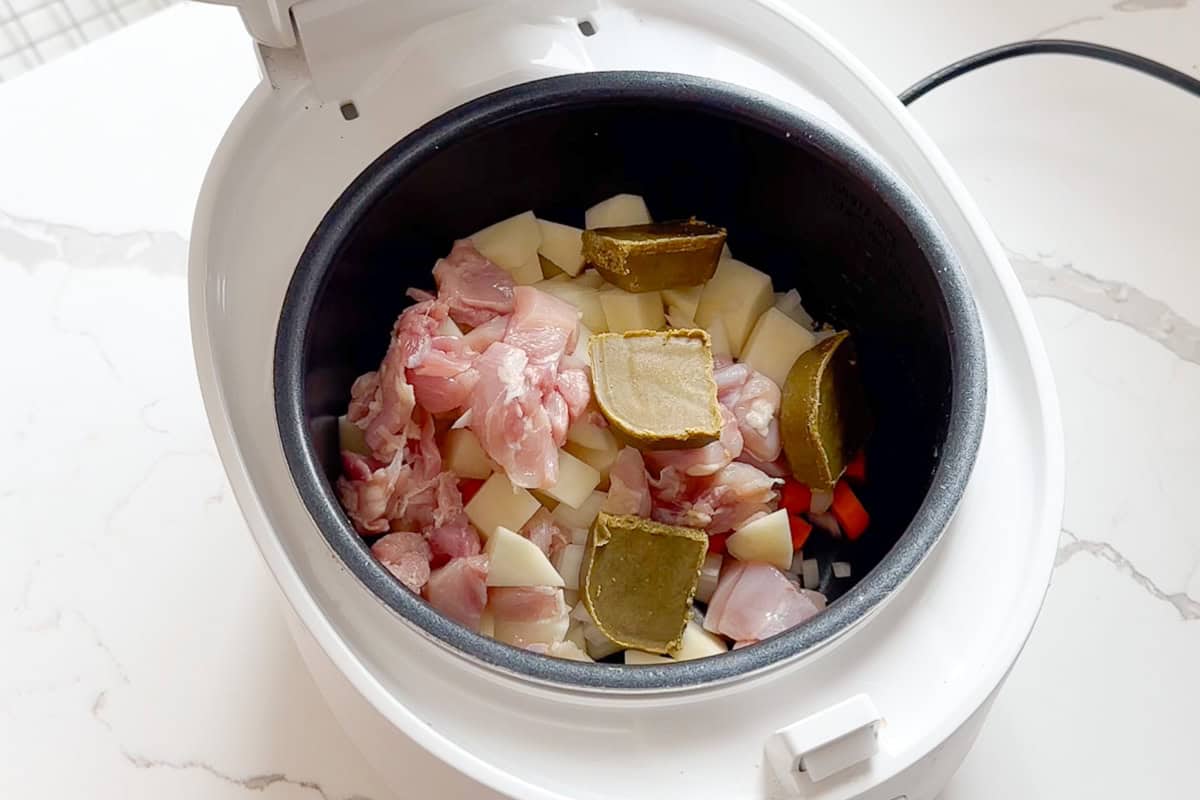
Place the chicken and vegetables in the rice cooker pot. Add the curry roux and the measured water according to the roux recipe card.
Spread the ingredients out evenly so the chicken and vegetables have room to cook. Avoid filling the pot beyond your rice cooker’s recommended level.
4. Start the cooking cycle
Close the lid and select the regular white rice setting. Let the rice cooker run through its cycle.
5. Stir and serve
Once the cycle finishes, gently stir the curry until the roux is fully incorporated and the sauce is evenly distributed around the chicken and vegetables. If the sauce needs a little more time to thicken, let it rest briefly on the warm setting, provided the cooker allows it.
Tip: This recipe was tested in a 6-cup rice cooker. Make sure your rice cooker has sufficient capacity for all the ingredients, and never fill it beyond the manufacturer's recommended limit.
Pro Tips to Make the Best Rice Cooker Chicken Curry
- Cut the vegetables to the right size - Keep the potatoes in reasonably sized chunks and slice the carrots a little thinner. This helps the vegetables cook more evenly without the smaller pieces becoming too soft.
- Give the curry a good stir at the end - The roux may settle or remain in small pieces during cooking. Make sure to stir thoroughly for a smoother, more evenly flavored sauce.
- Check your rice cooker capacity - Make sure your rice cooker is large enough to hold the rice, chicken, vegetables, and liquid without exceeding its maximum fill line.
Variations & Add-ins to Customize Your Rice Cooker Curry
- Meat substitutes: Swap the chicken for bite-sized pork belly or beef, adjusting the cooking time as needed. If you want a meat-free option, you may use firm tofu.
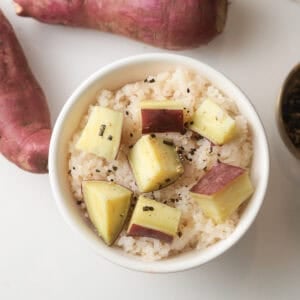
- Vegetables: Sweet potatoes, mushrooms, peas, or green beans can be added or substituted depending on what you have.
- Curry roux: Choose mild, medium-hot, or hot Japanese curry roux according to your family's spice preference. Follow the package directions when adjusting the amount, since brands and spice levels can vary.
- Apples: Adds sweetness to balance the rich flavors of the curry. You can add apples directly onto the curry mixture or purchase a curry roux with apple flavor.
- Chocolate: Deepens the curry flavor. Make sure to use dark chocolate instead of milk chocolate to avoid it from getting too sweet.
What to Serve with Rice Cooker Chicken Curry
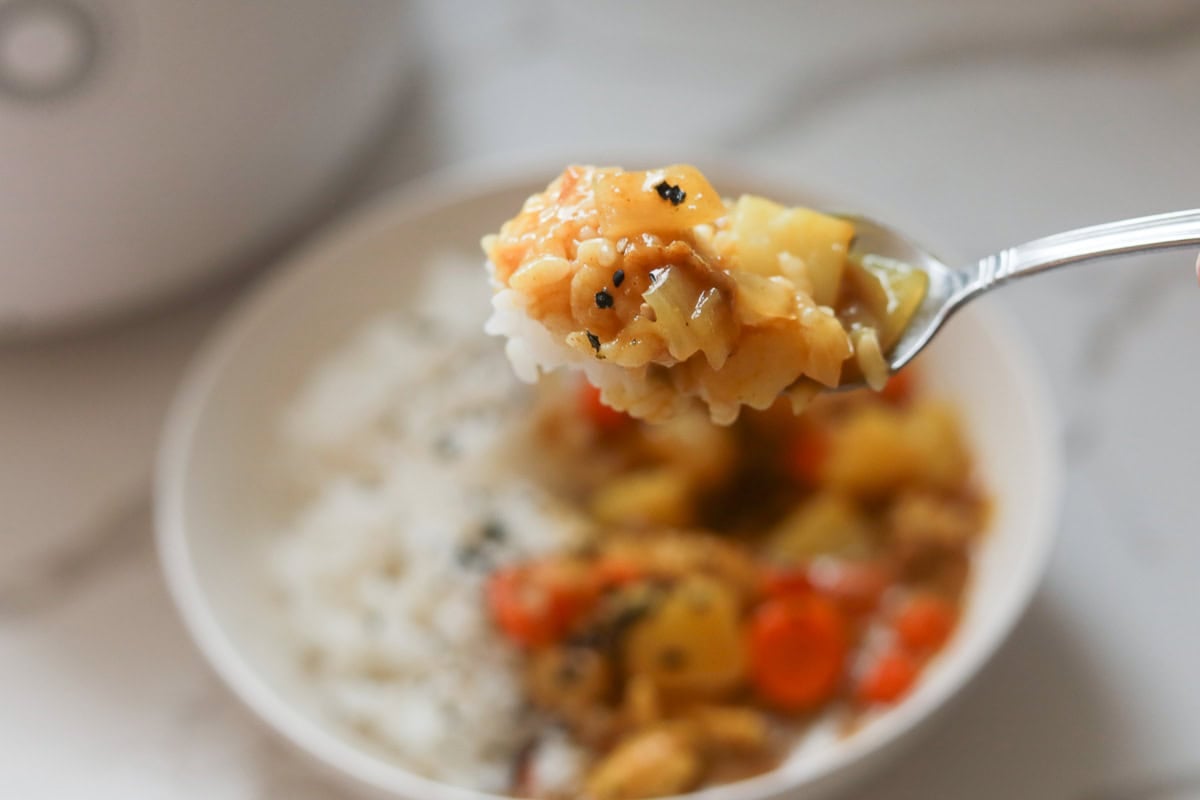
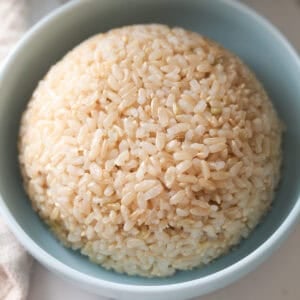
- Rice - The classic fluffy rice is perfect for absorbing the curry’s rich sauce. You may use stovetop Jasmine rice, rice cooker brown rice, or rice cooker sushi rice.
- Pork Katsu - Crispy, golden pork cutlets make the meal extra filling. Serve alongside the curry for a Japanese-inspired dinner with plenty of crunch.
- Japanese Udon Noodles - Chewy udon noodles are a comforting alternative if you want to enjoy the curry with noodles instead of rice.
- Japanese Cold Soba Noodles - These chilled buckwheat noodles offer a refreshing contrast to the warm, rich curry.
Storage & Reheating
Refrigerator: Let the curry cool, then transfer it to an airtight container and refrigerate within 2 hours of cooking. Store for 3 - 4 days.
Freezer: Freeze the cooled curry in individual portions in freezer-safe containers for about 2–3 months for best quality.
Reheating: Reheat the curry on the stovetop over medium-low heat or in the microwave until steaming hot throughout, stirring occasionally. Add a small splash of water if the sauce has thickened too much in the refrigerator. Reheat leftovers to 165°F (74°C), and avoid repeatedly cooling and reheating the same batch.
Yes! A rice cooker can cook curry by combining the protein, vegetables, curry roux, and liquid in one pot. Use a suitable cooking cycle and avoid exceeding your rice cooker’s recommended fill line.
Absolutely! Chicken is a great protein to add to curry and cooks well in the rice cooker. The regular white rice setting works well for this recipe, allowing the ingredients to cook together in the same pot.
More Rice Cooker Recipes
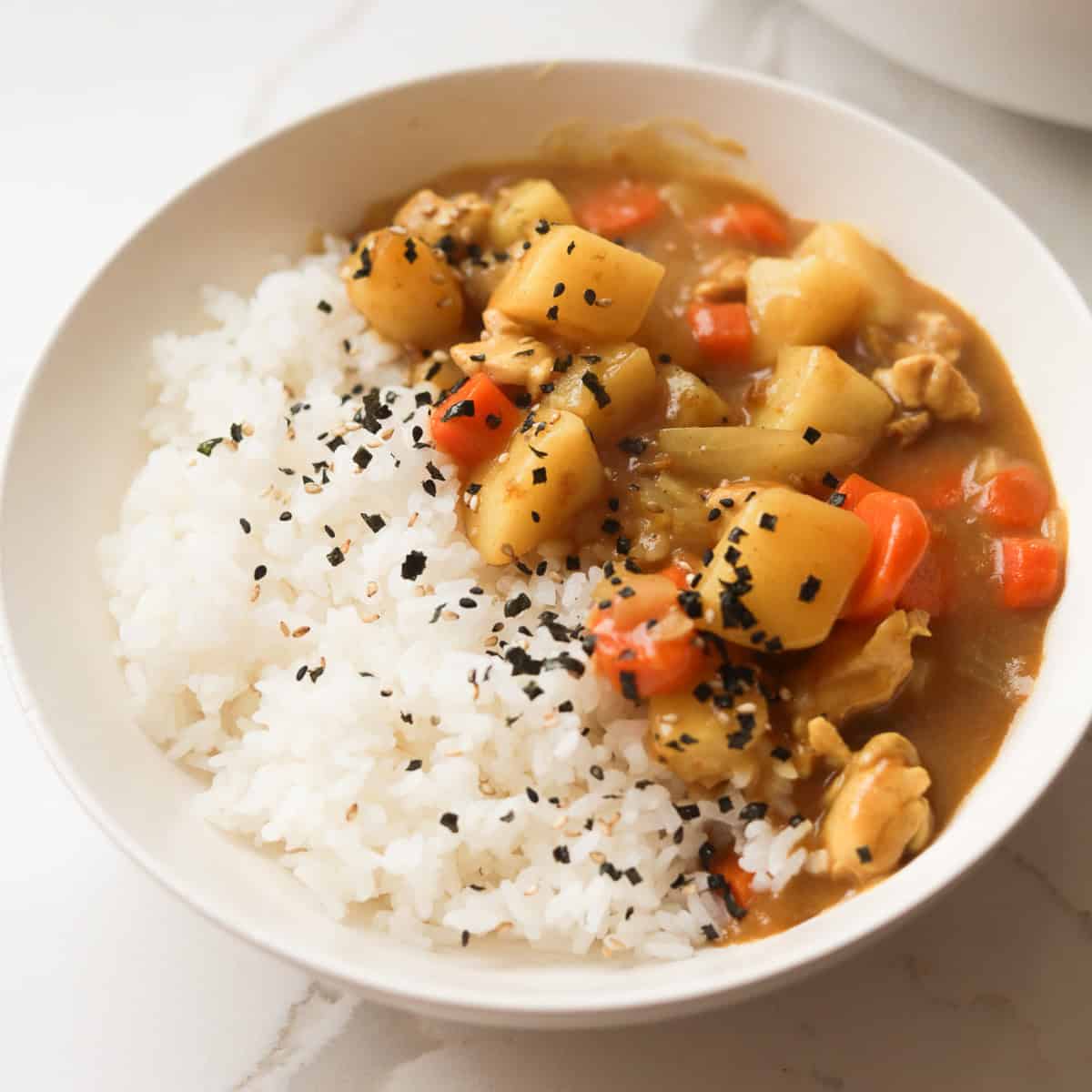
Rice Cooker Japanese Curry
Equipment
- rice cooker This recipe was tested in a 6-cup rice cooker. Make sure your rice cooker has sufficient capacity for all the ingredients, and never fill it beyond the manufacturer's recommended limit.
Ingredients
- 1 pound boneless, skinless chicken cut into bite size pieces
- 2 carrots, peeled and cut into 1 inch pieces
- 2 potatoes, peeled and cut into 1 inch pieces
- ½ white onion, chopped
- 110 grams Curry roux, mild I use S&B brand, use half of the 12 serving packet
- 2 ½ cups water
- white rice for serving
Instructions
- Place the cut chicken, vegetables and onion in the rice cooker pot.
- Break up the curry roux into small pieces. Add the curry roux and water the the rice cooker pot.
- Spread the ingredients out evenly so the chicken and vegetables have room to cook. Avoid filling the pot beyond your rice cooker’s recommended level.
- Close the lid and select the regular white rice setting. Let the rice cooker run through its cycle.
- Once the cycle finishes, gently stir the curry until the roux is fully incorporated and the sauce is evenly distributed around the chicken and vegetables. If the sauce needs a little more time to thicken, let it rest briefly on the warm setting.
Leave a Reply